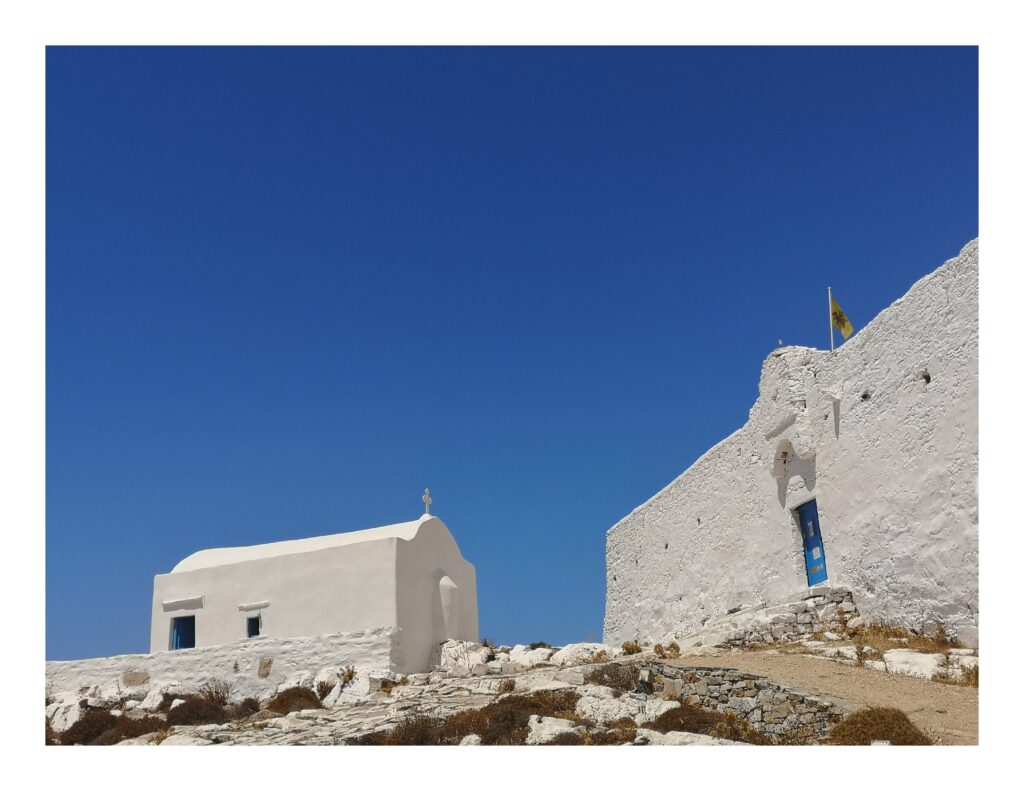
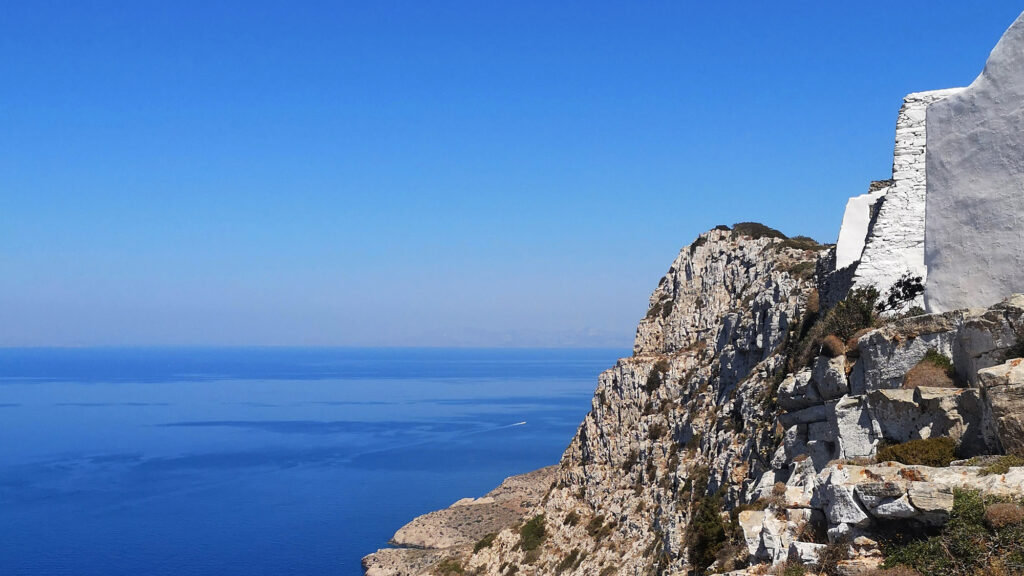
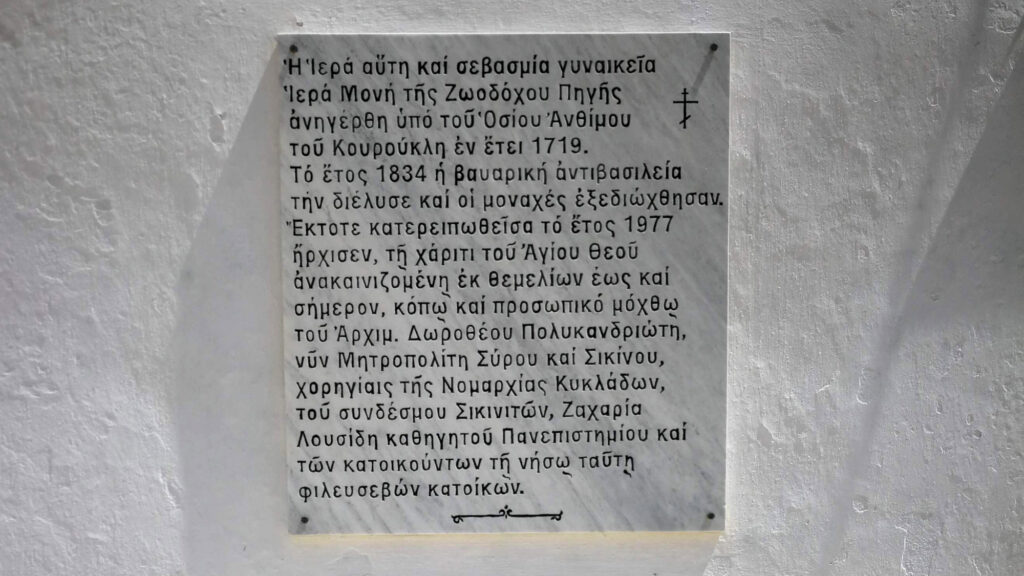
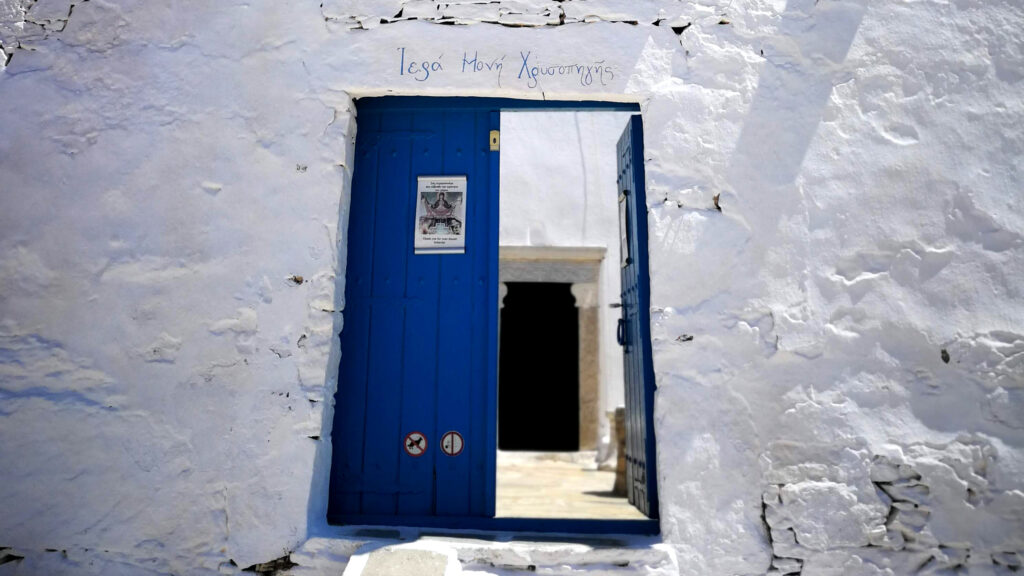
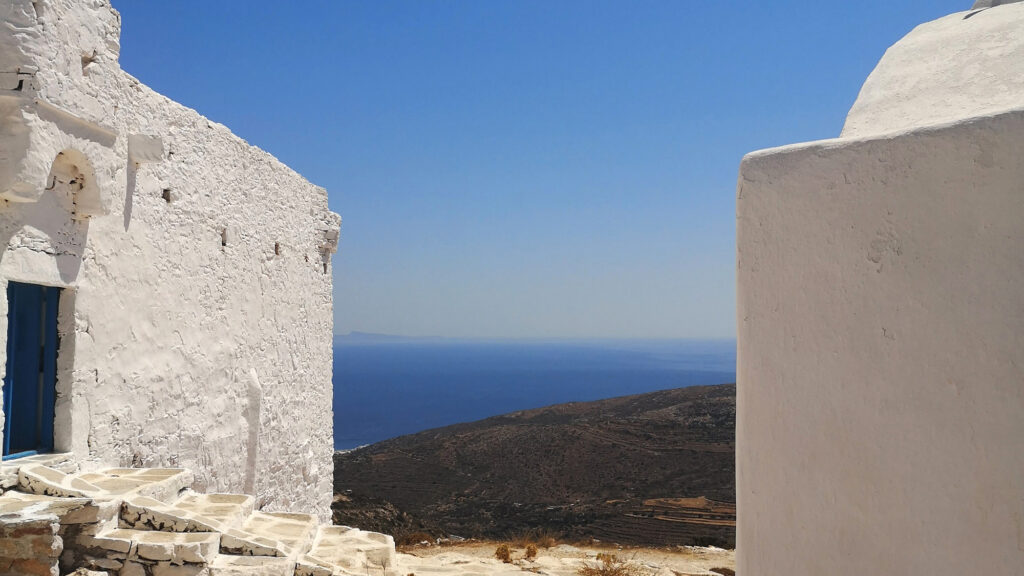
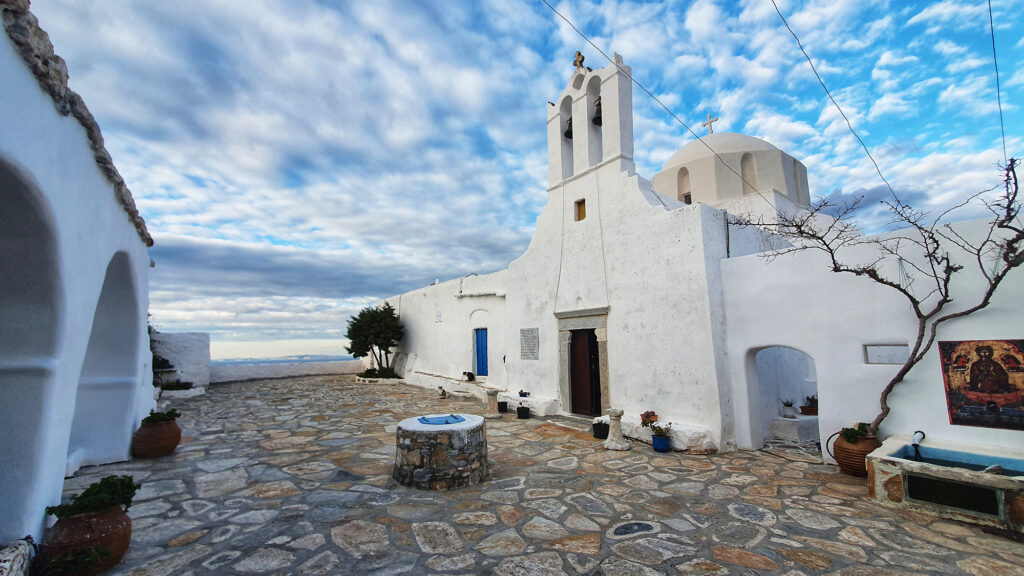
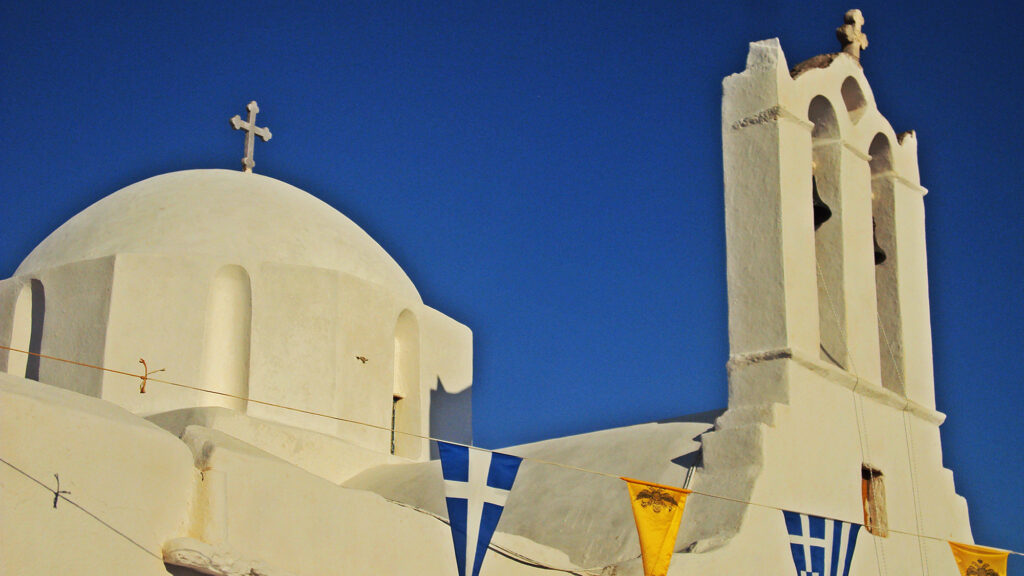
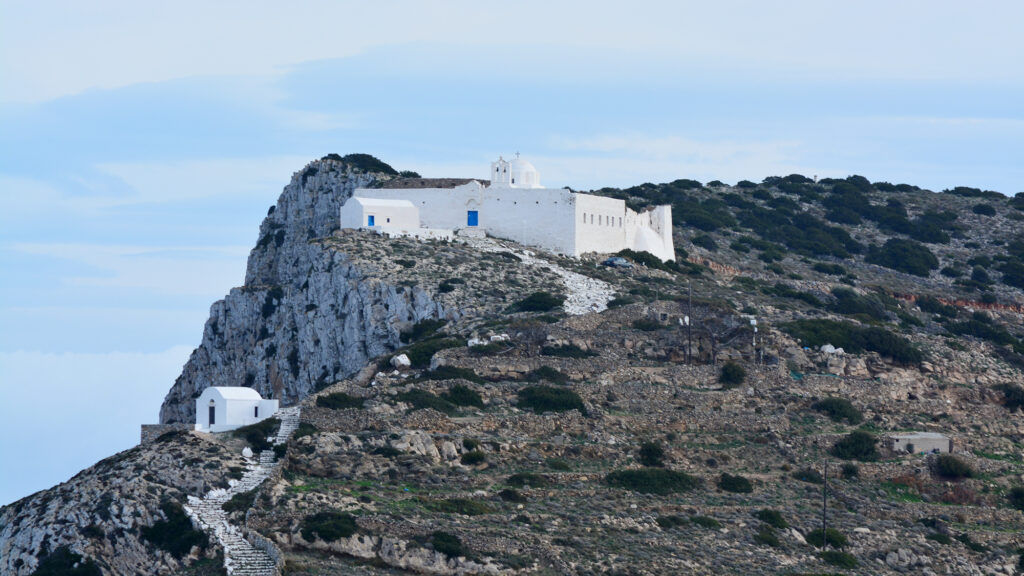
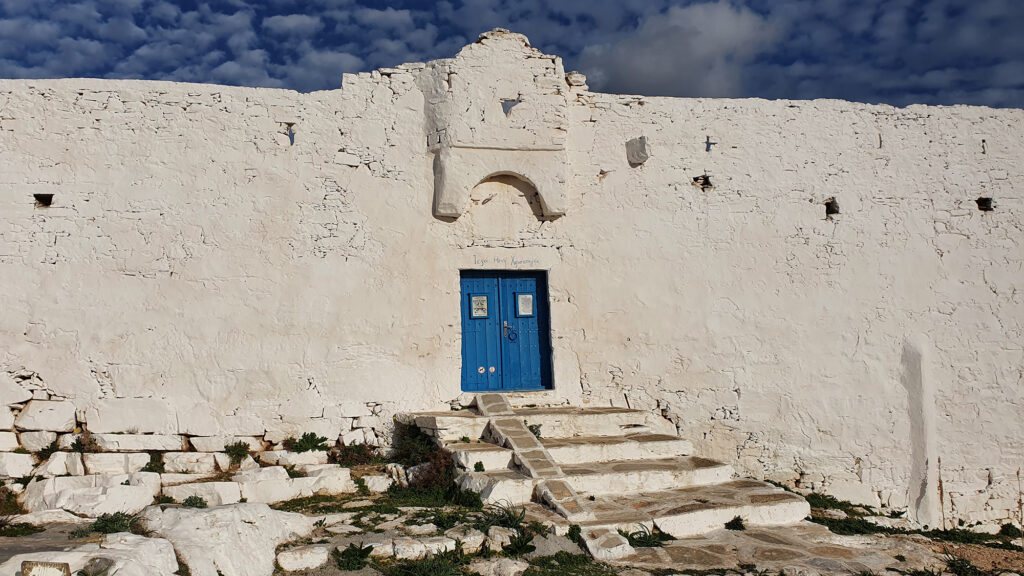
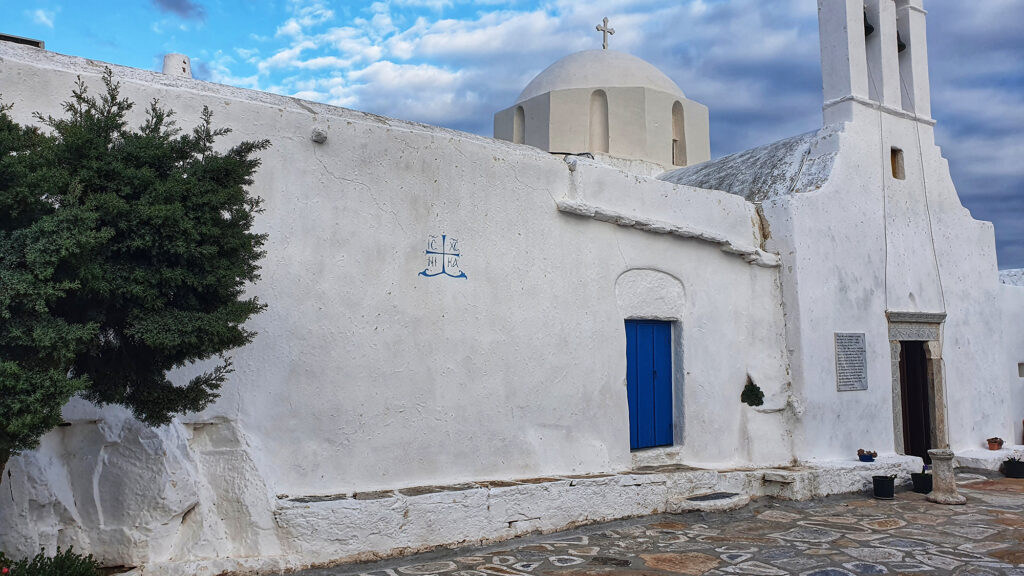
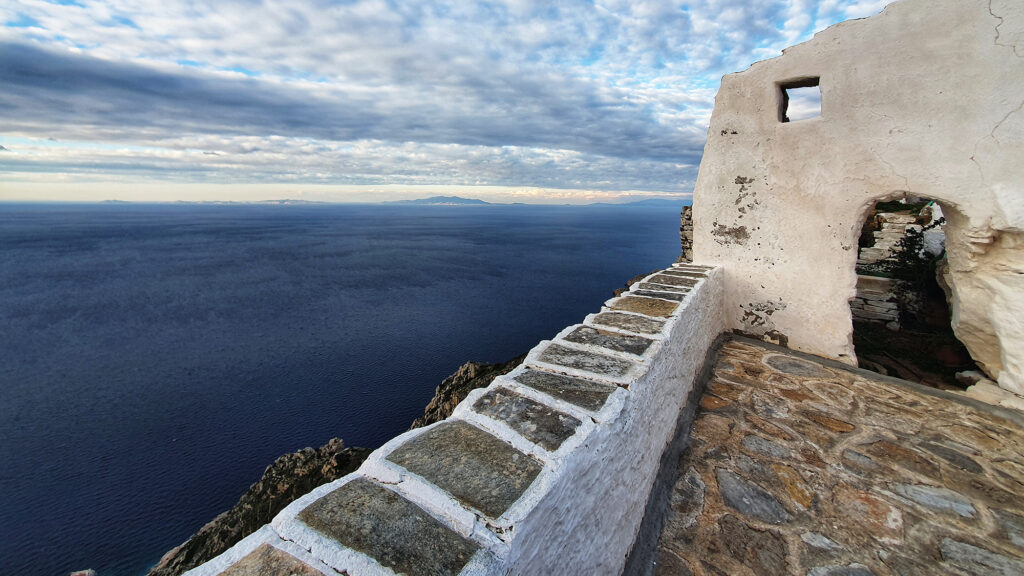
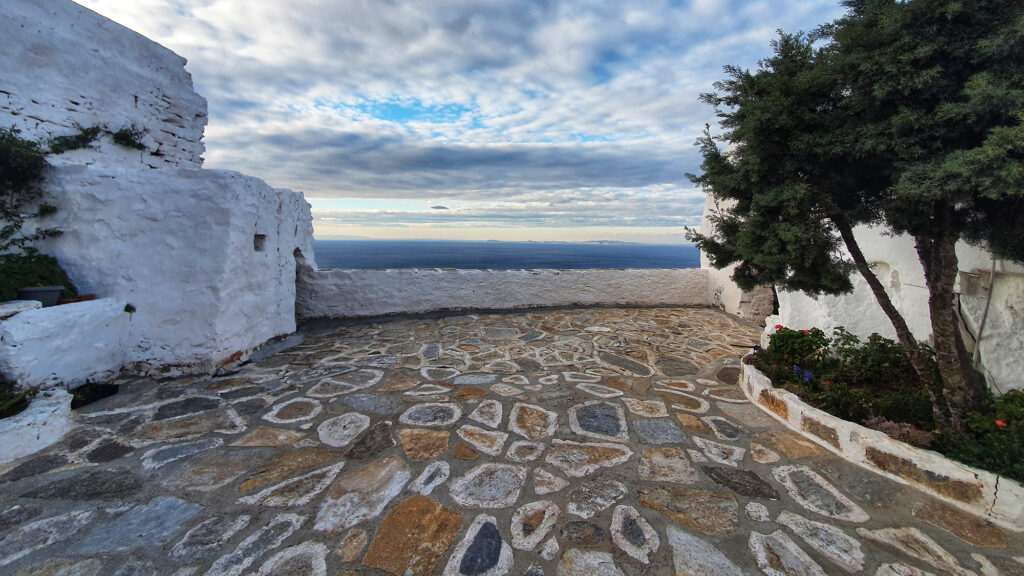
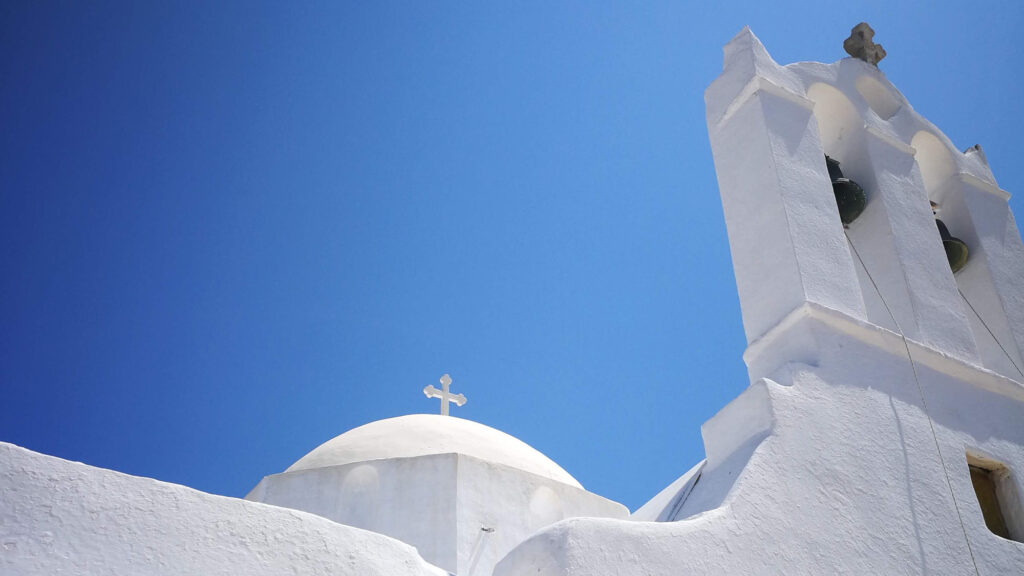
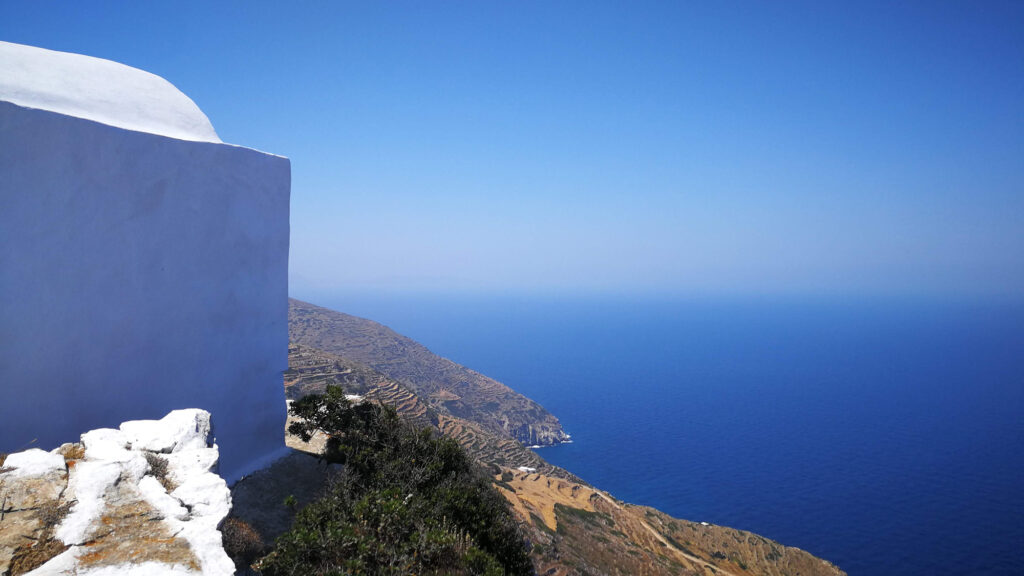
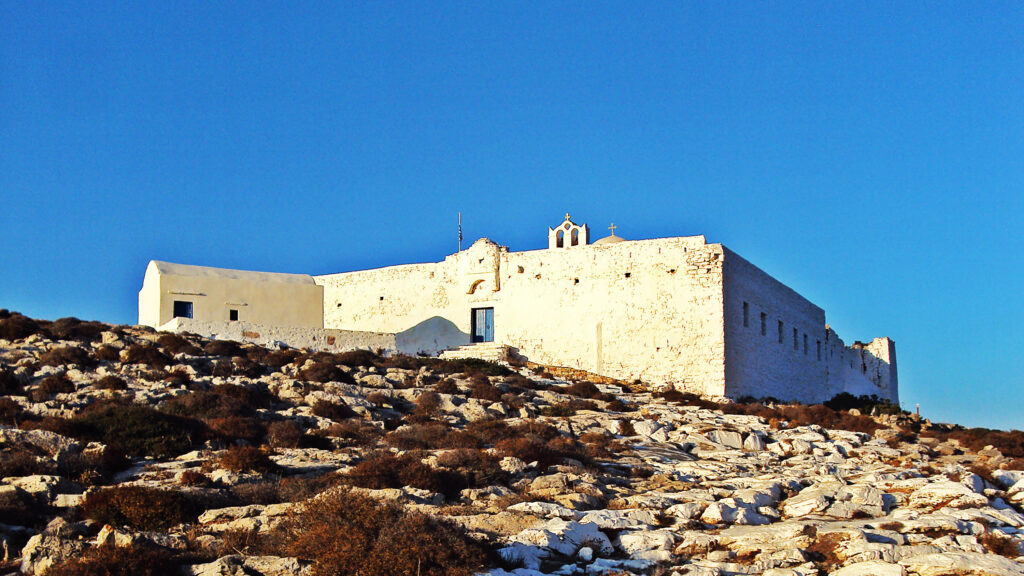
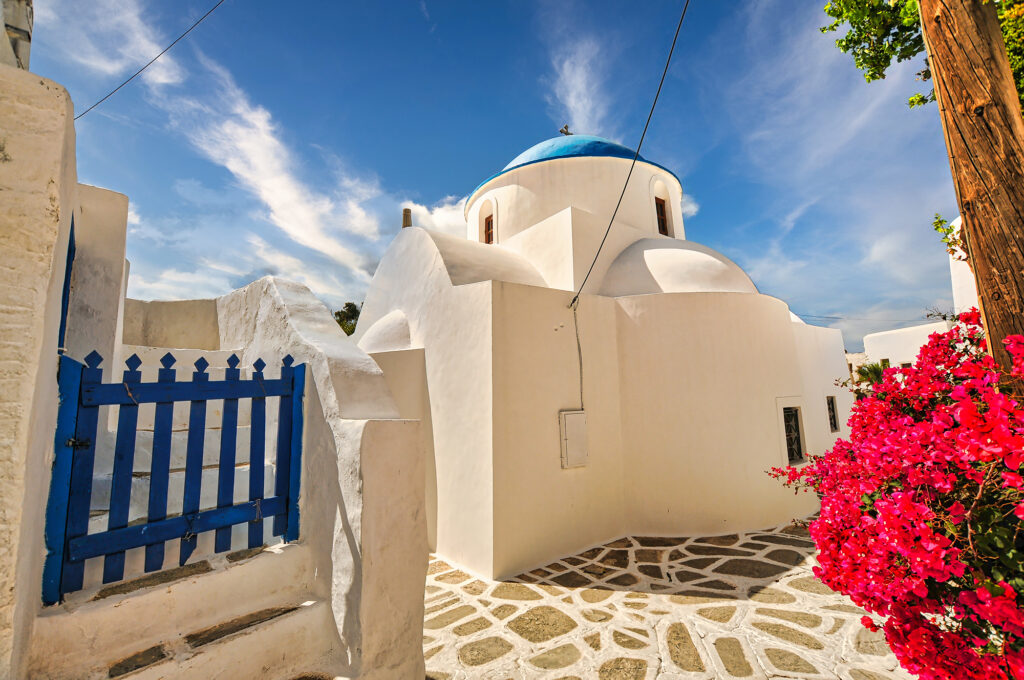
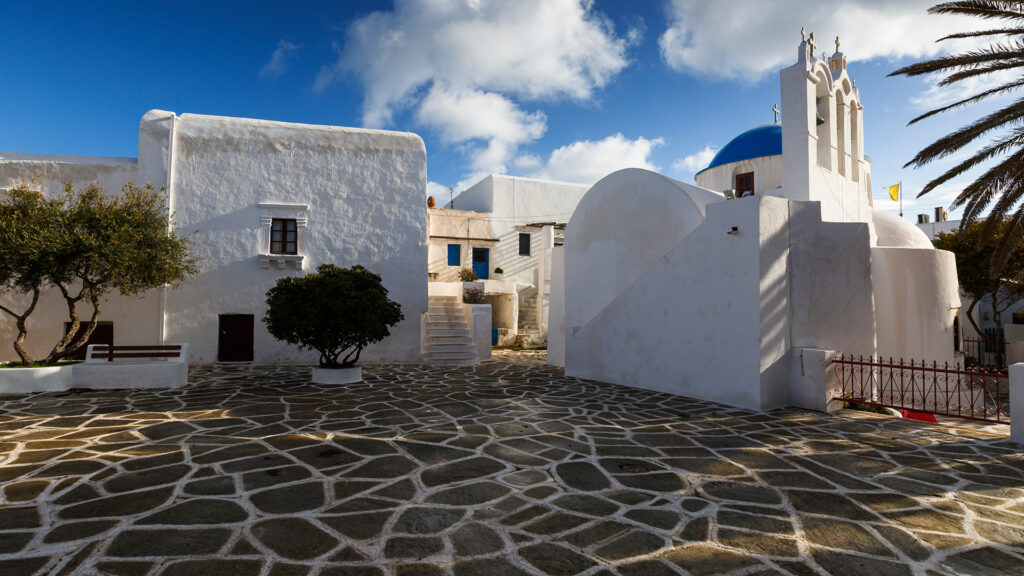
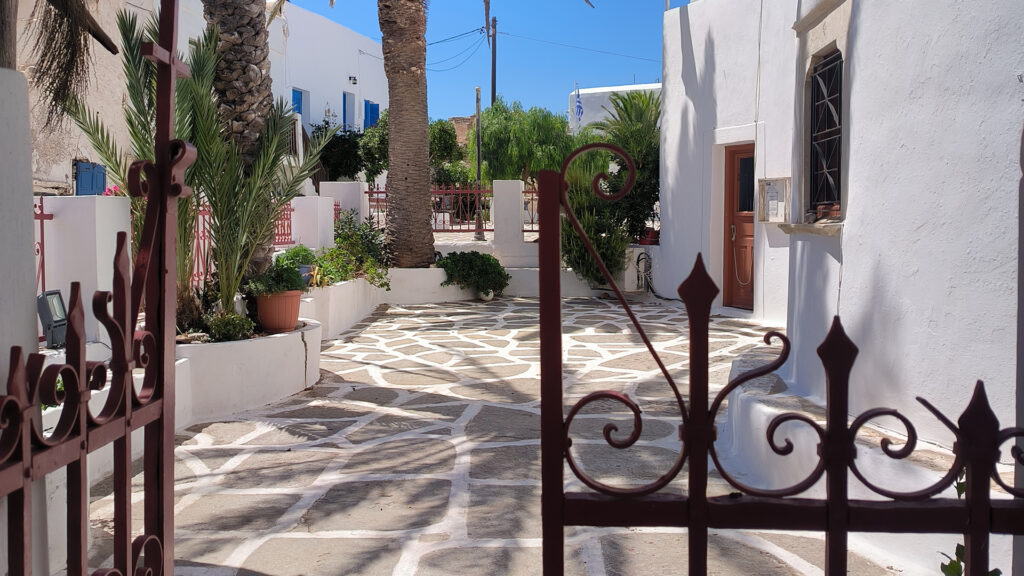
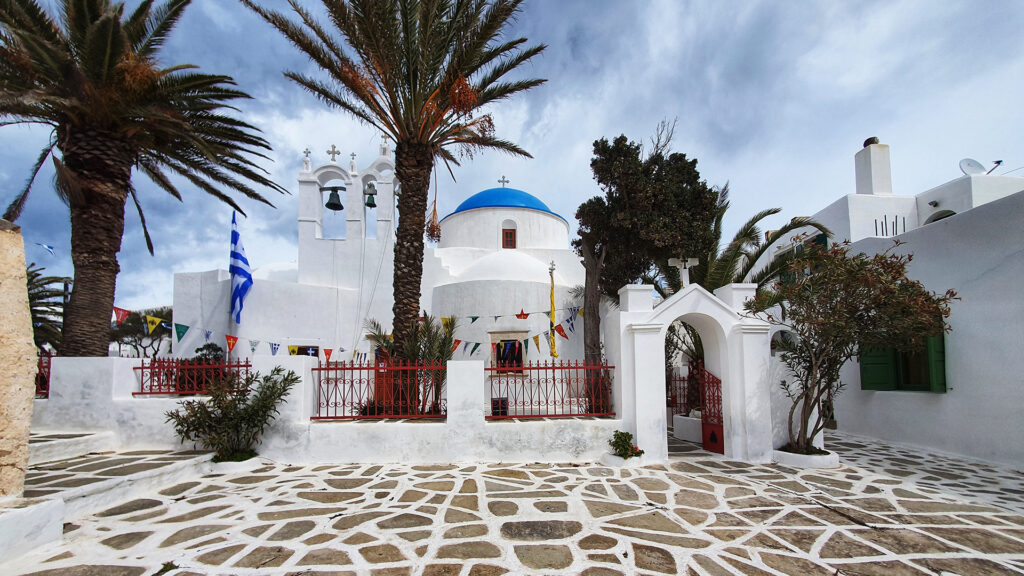
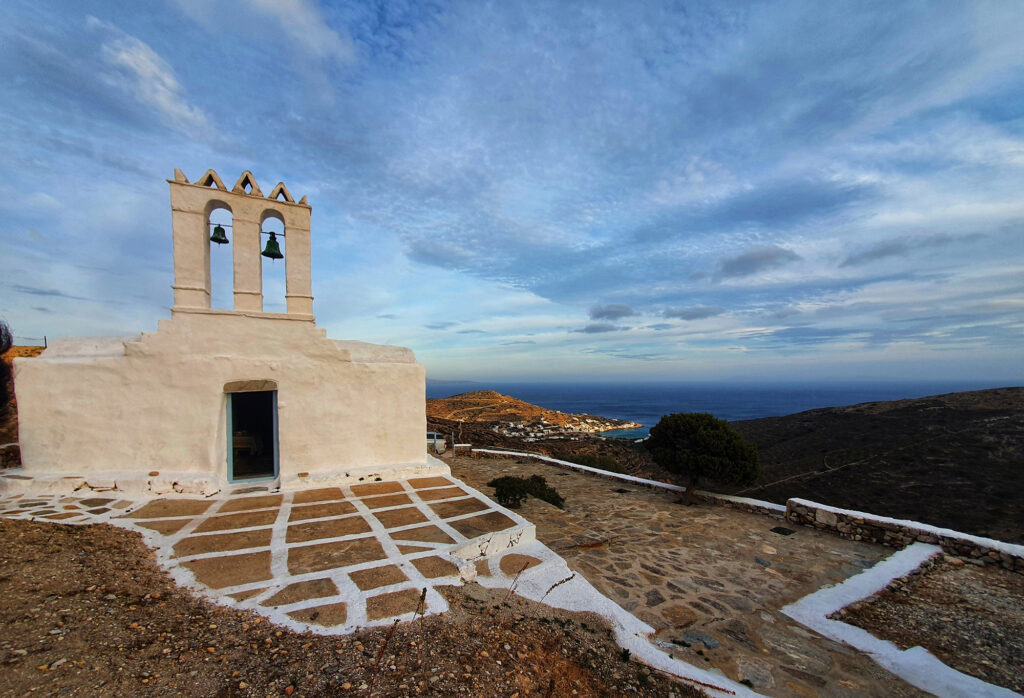
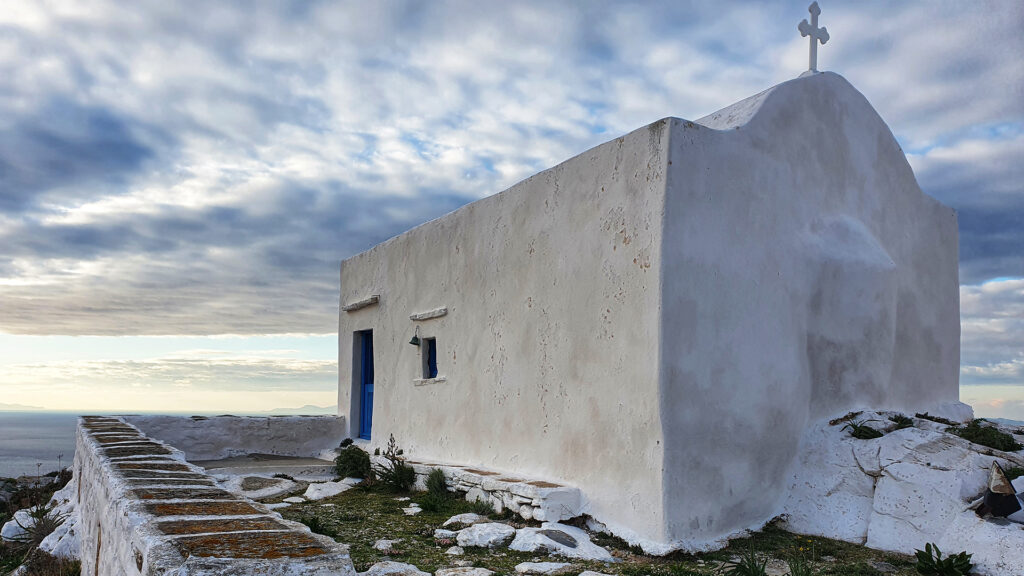
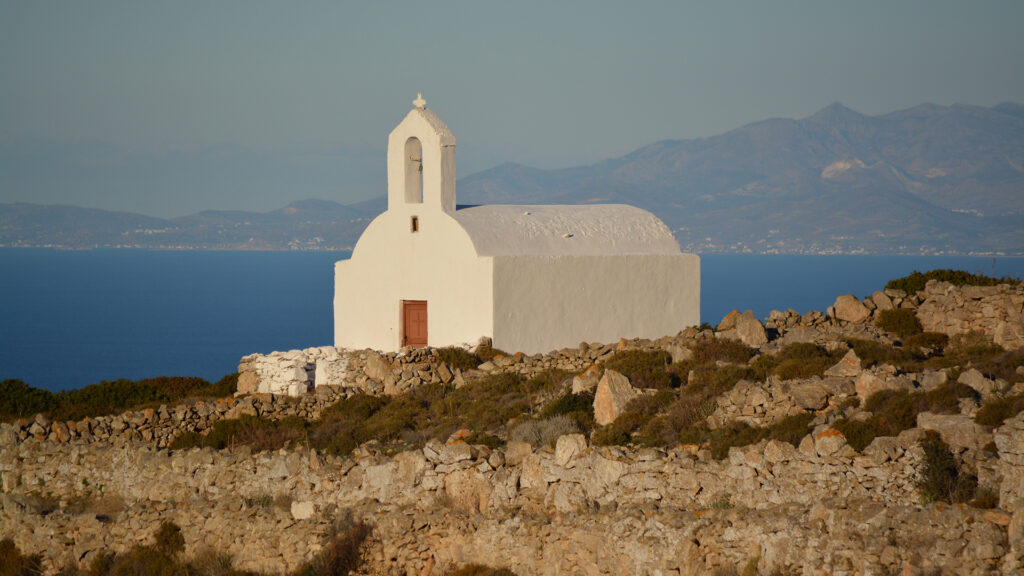
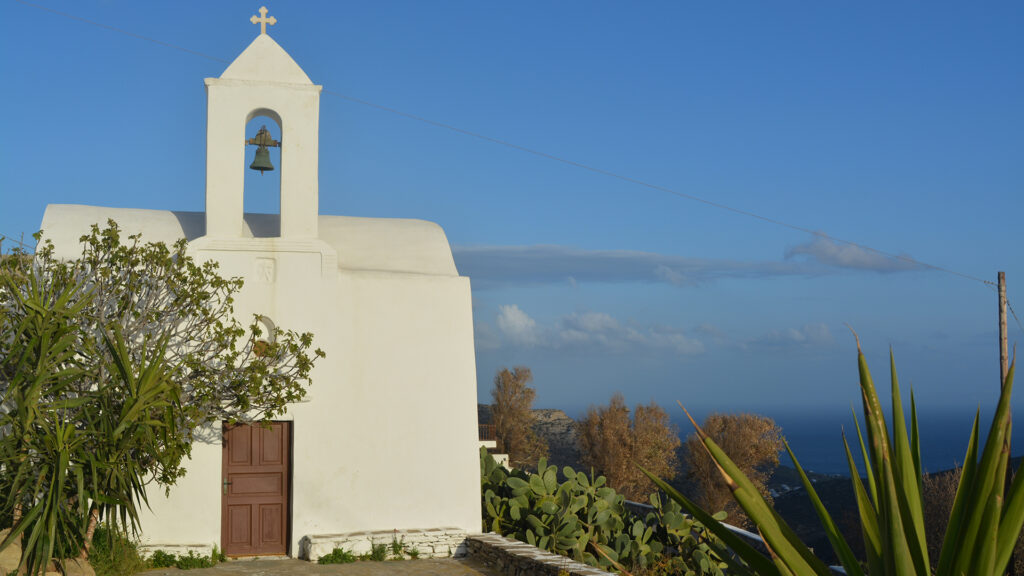
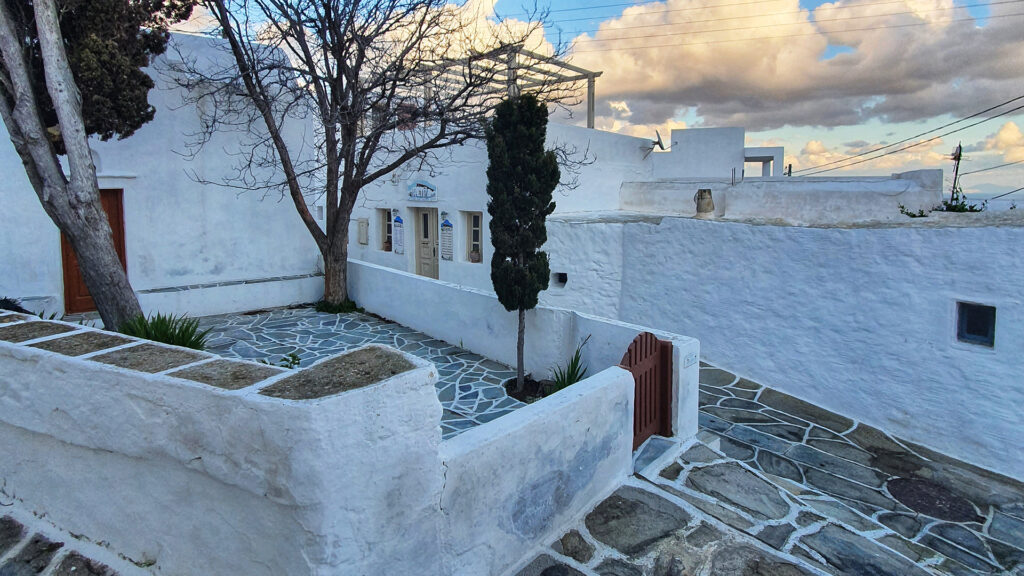
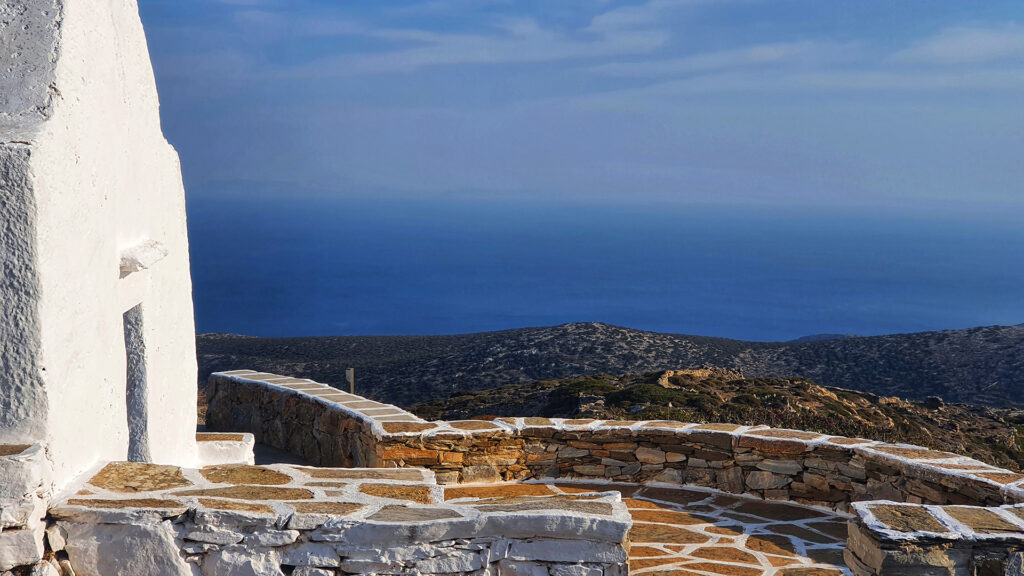
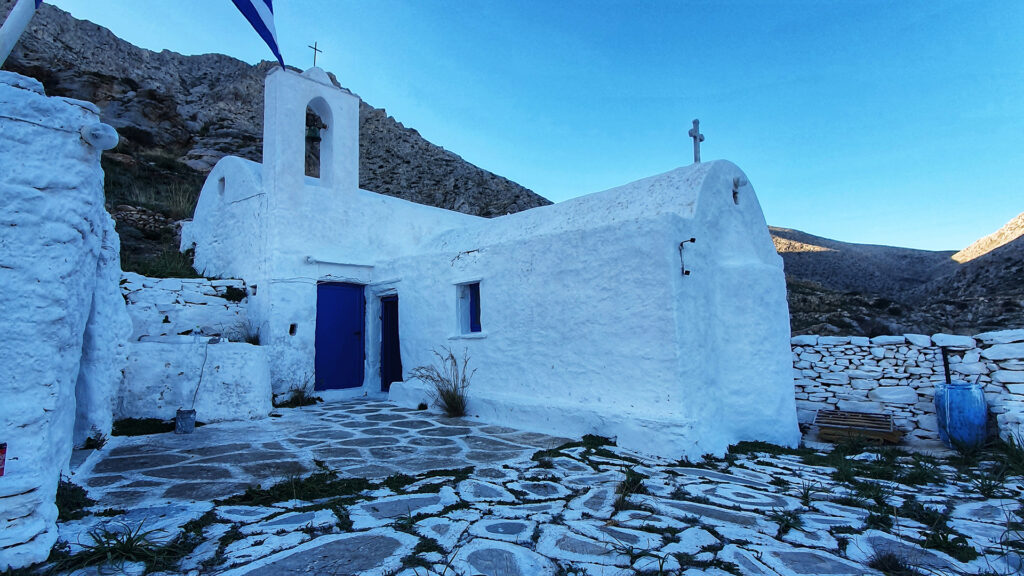
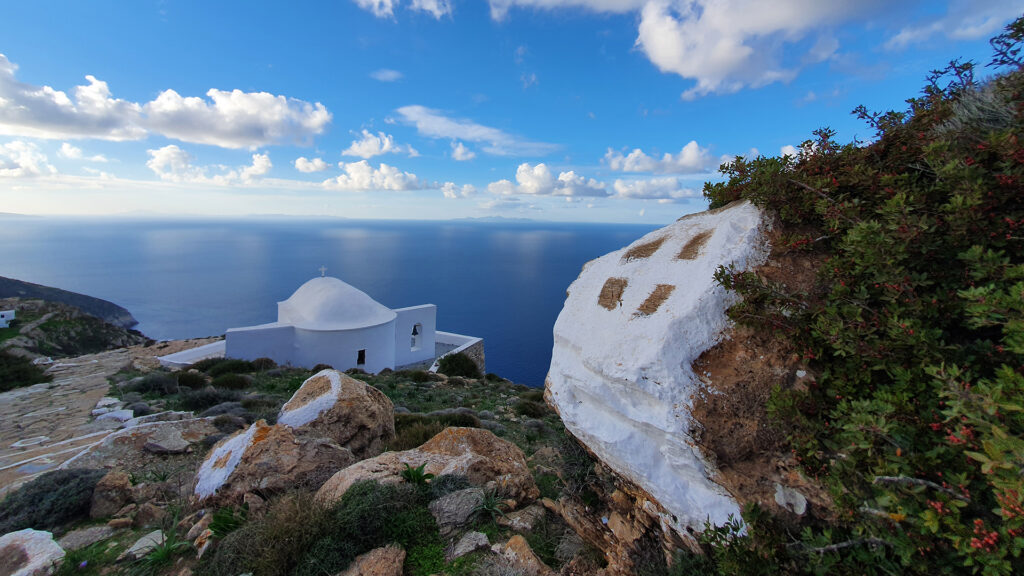
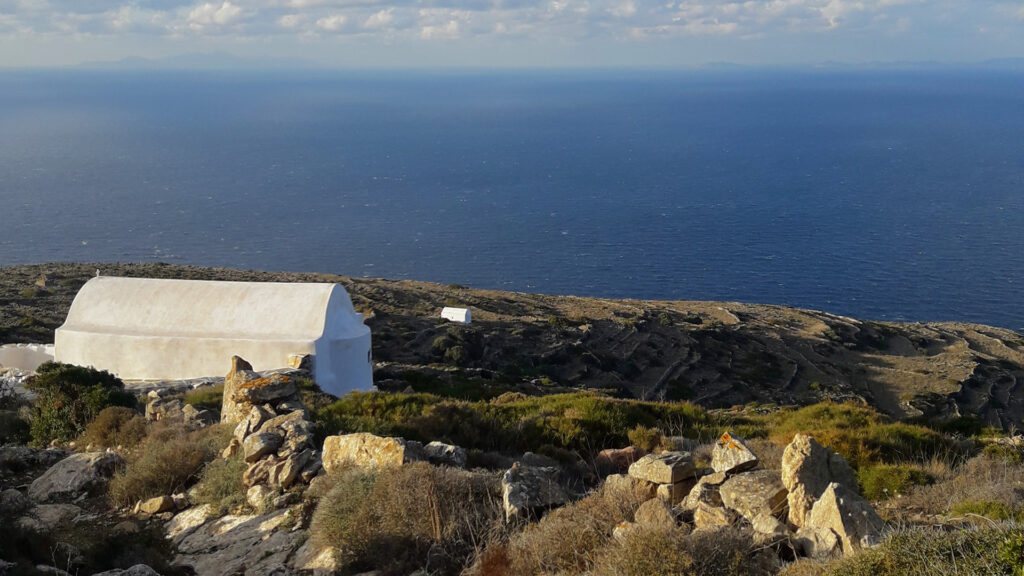
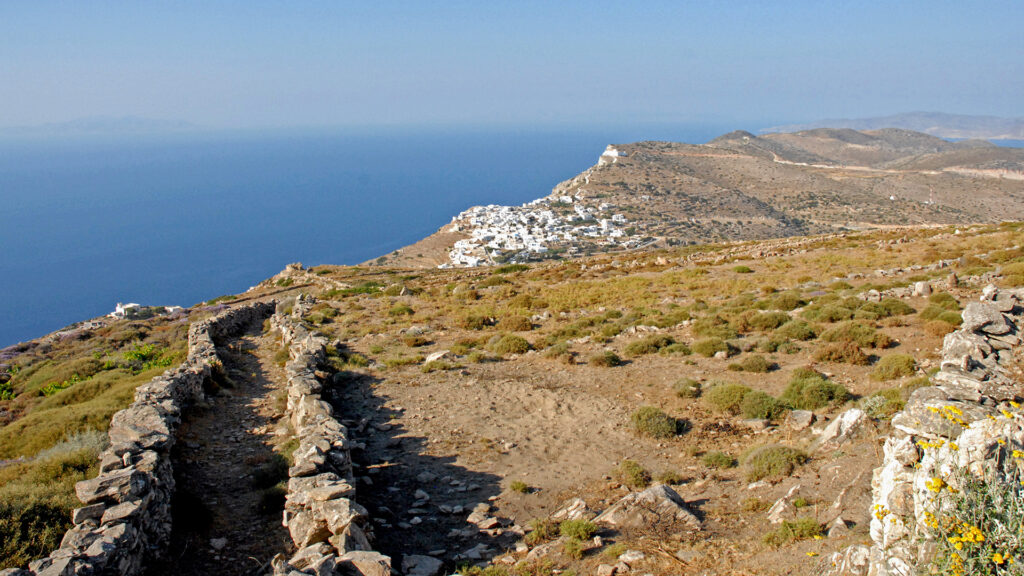
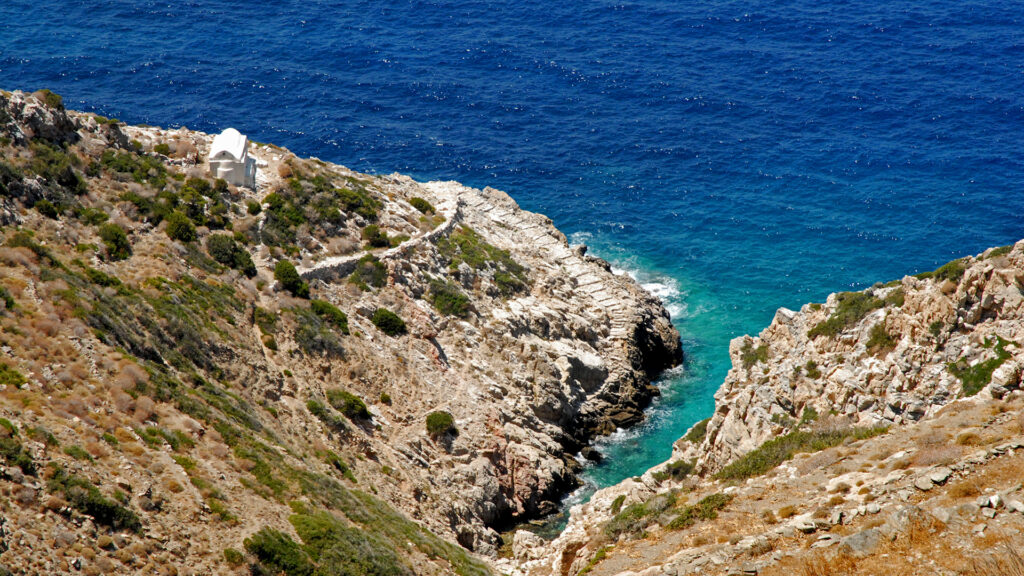
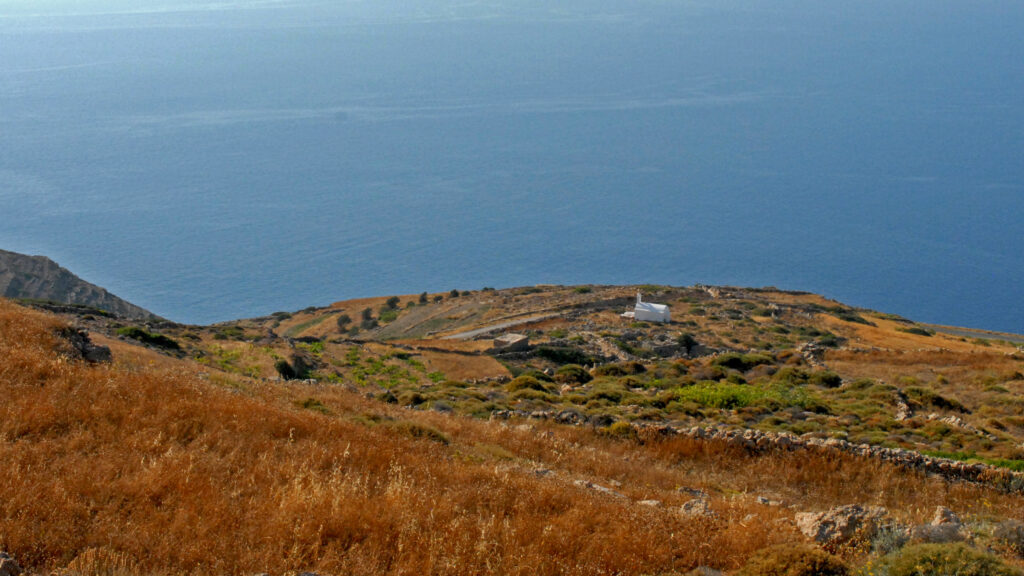
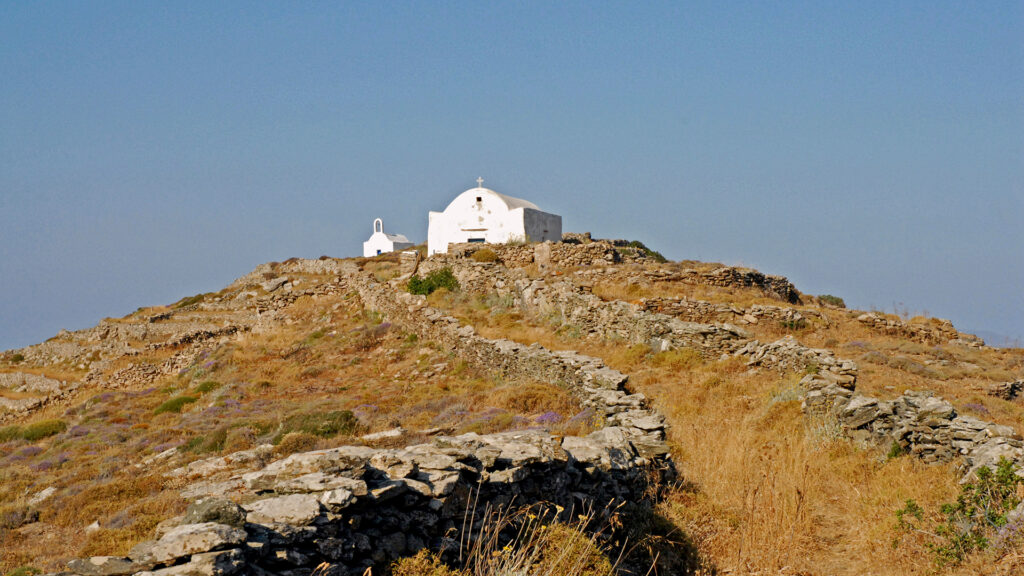
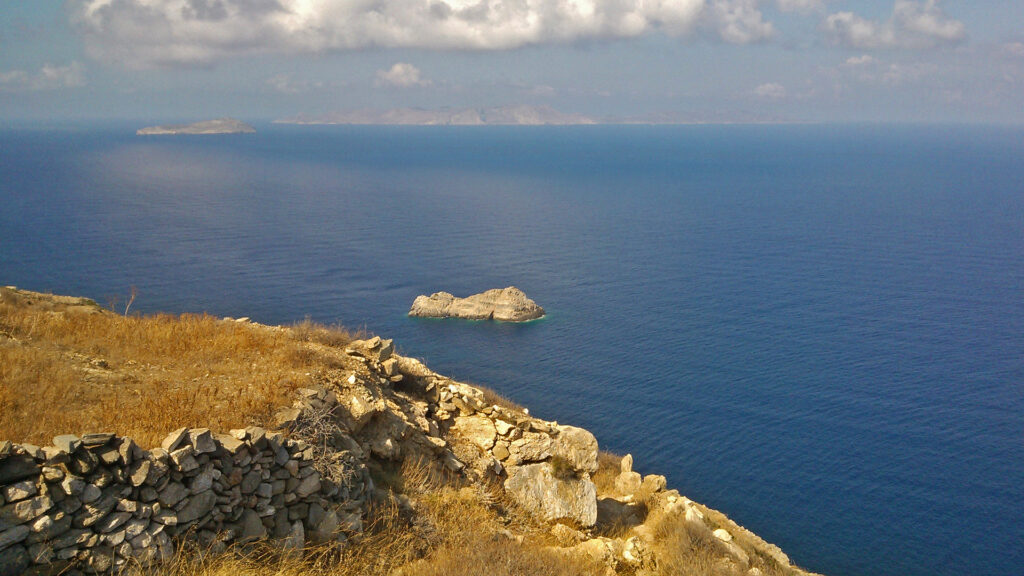
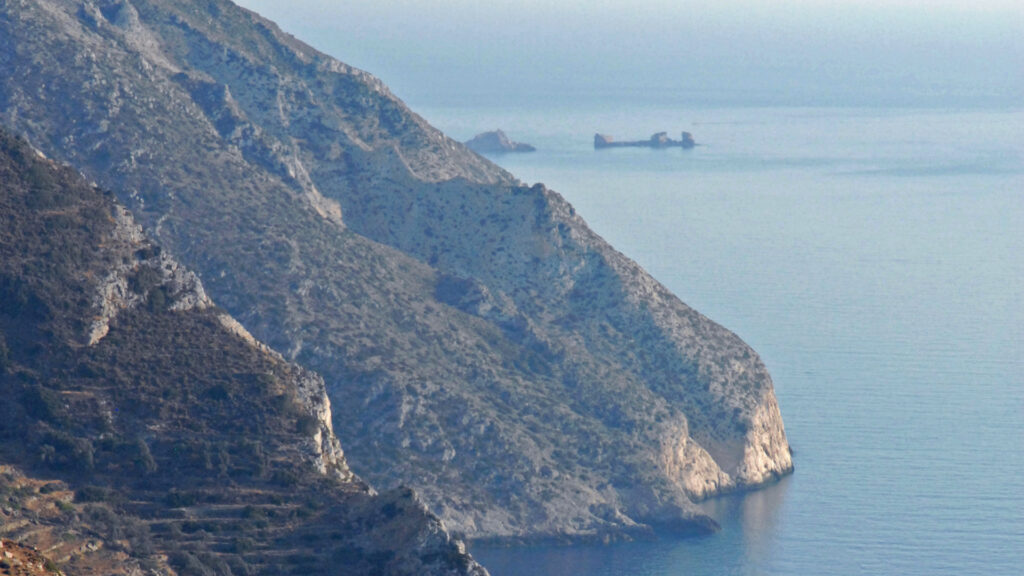
East of Vouni, at an altitude of 370 meters above sea level, stands the Monastery of Zoodochos Pigi, one of Sikinos’s most iconic monuments. It was built during the era of piracy, shortly after the Cretan War. The monastery resembles a fortress, enclosed by sturdy walls that protected the nuns and local inhabitants during raids. An inscription bearing the date July 10, 1770—marking the time of the church’s renovation—is preserved above the entrance to the main church (katholikon). Inside, monastic cells, storerooms, and ovens remain, as well as a small opening overlooking the cliff, through which the besieged could hoist up supplies or escape in times of need. According to tradition, the icon of Zoodochos Pigi (the Life-Giving Spring) was discovered at Kavo and originated in Paros. Today, it is kept in the Church of Agios Vasileios in Chora and is ceremoniously returned to the monastery each year, accompanied by the local residents.
The main sights of Sikinos
Panagia Pantanassa
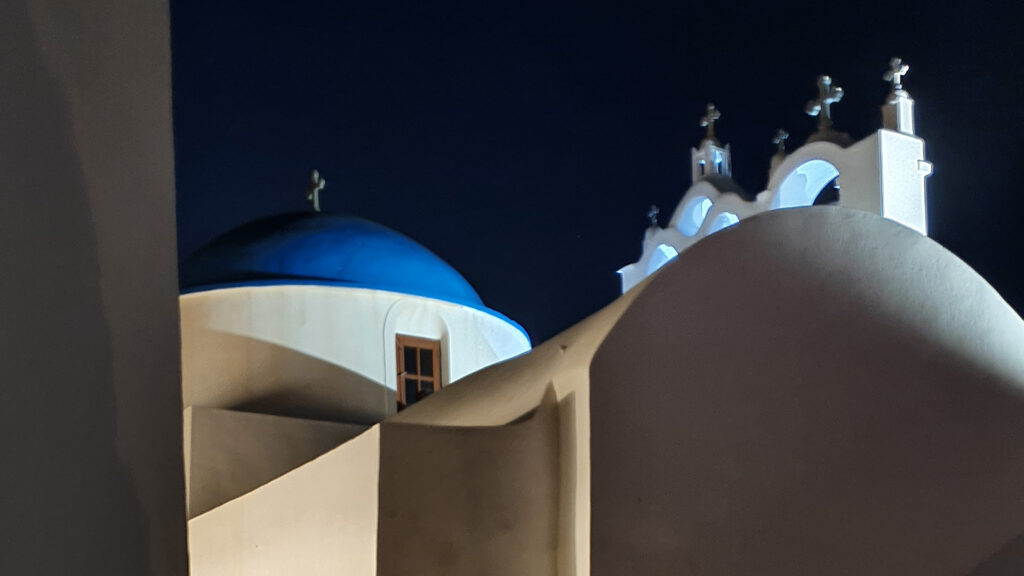
The Church of Panagia Pantanassa, with its blue dome, stands out in the Kastro square. Built in 1787, it was originally dedicated to the Holy Cross. Take note of the gilded, wood-carved Baroque iconostasis, featuring magnificent icons belonging to the Cretan School. Here also lies the icon of the Virgin Mary (Panagia Pantanassa), adorned with numerous votive offerings. According to legend, a priest serving at the Church of Saint John the Forerunner repeatedly had the same dream over several nights. A woman urged him to go to the southernmost tip of the island—specifically to the location known as Gialista (opposite the islet of Kalogiros). Eventually convinced, he went to the site, where—miraculously—an icon of the Theotokos was revealed to him; he then transported it, accompanied by the faithful, to the Church of Saint John. However, as the icon would “disappear” from the church each night only to be found the next day at the Church of the Holy Cross in the Kastro, the residents of Sikinos decided to place it permanently in the church that now bears its name. The Church of Pantanassa celebrates its feast day on the first Sunday of Great Lent (Sunday of Orthodoxy).
Six Byzantine churches of exceptional historical and artistic value are preserved on Sikinos, adorned with frescoes dating from the 13th to the 14th century. These represent the oldest surviving examples of Byzantine painting on the island, making Sikinos second only to Naxos among the Cyclades in terms of the number of frescoed churches.
The Church of Christ the Light-Giver (Fotodotos Christos) at the Christos site, approximately 10 minutes west of Chora.
Agios Nikolaos at the Rachi Katergou site.
Agios Stefanos, southwest of the village.
Panagia, above Alopronia.
Agia Anna, at the Piskopi site.
Agios Georgios, at the Piskopi site.
Trails of Sikinos
Trails of Sikinos
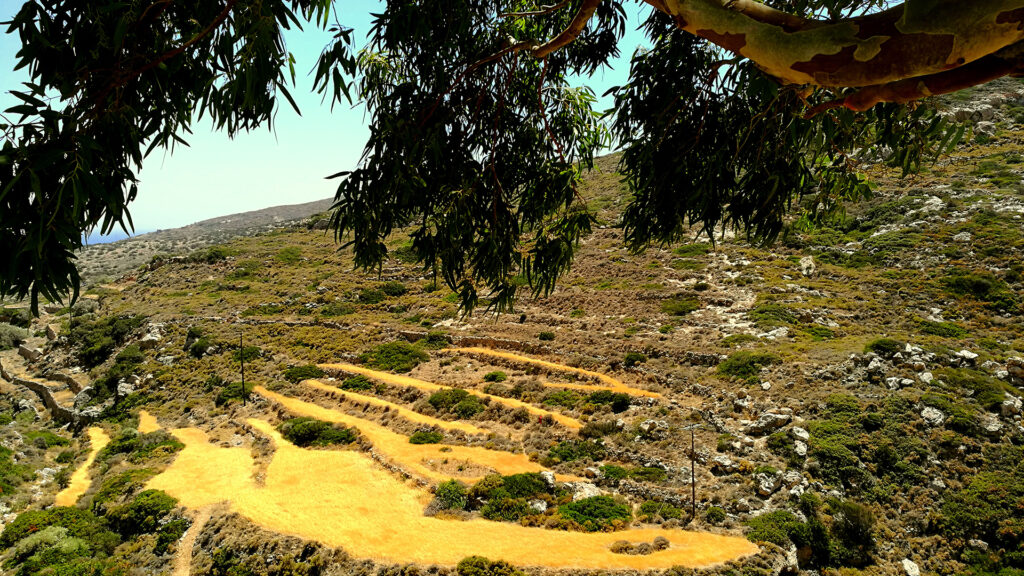
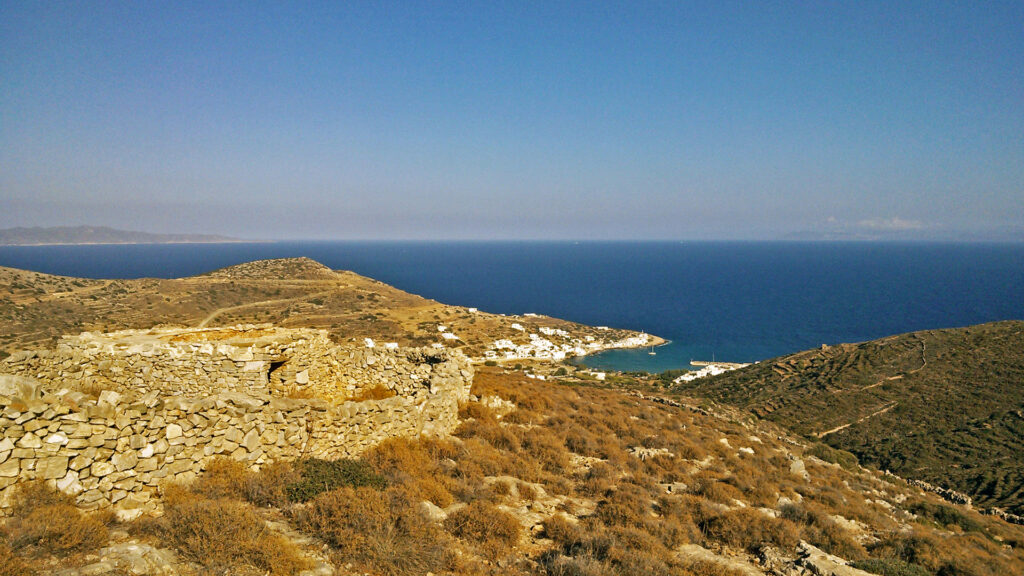
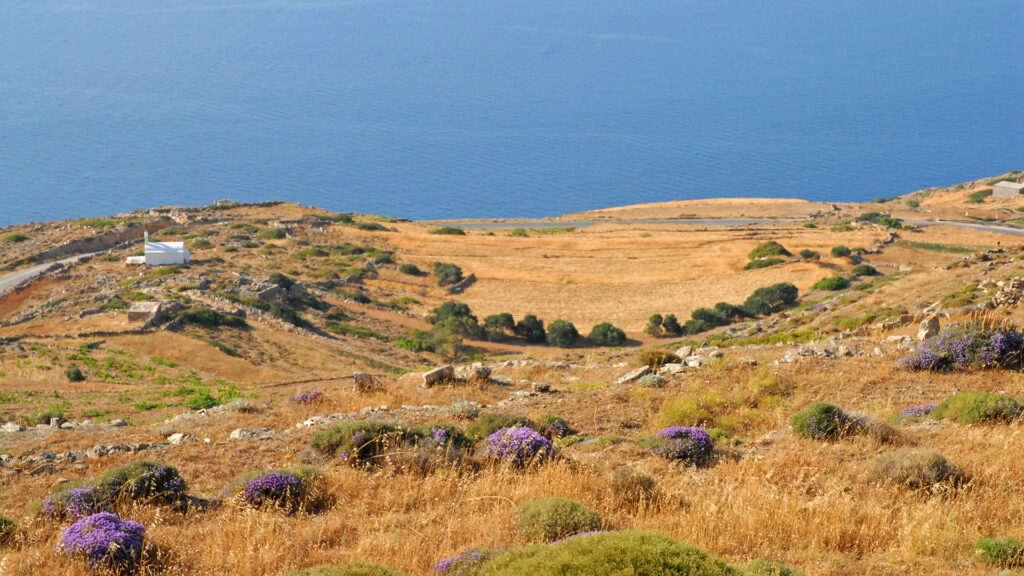
Sikinos is a true paradise for hiking enthusiasts. The island boasts an extensive network of trails connecting Chora, Alopronia, Episkopi, and the more secluded beaches. While walking these paths, visitors discover old stone-paved roads, dry-stone walls, small chapels, and panoramic views of the Aegean. The trails follow traditional routes used by locals for centuries to connect their settlements and fields. Many are well-preserved and signposted, offering routes of varying difficulty—ranging from easy walks near Chora to demanding hikes leading to remote beaches. Hiking in Sikinos is not merely exercise; it is an experience of authentic Cycladic nature and history. Every trail tells a story from the island’s past.